Learn More
Frequently Asked Questions
Learn More
Frequently Asked Questions
Learn More
Frequently Asked Questions
OVERVIEW
What is remote surgery & procedures?
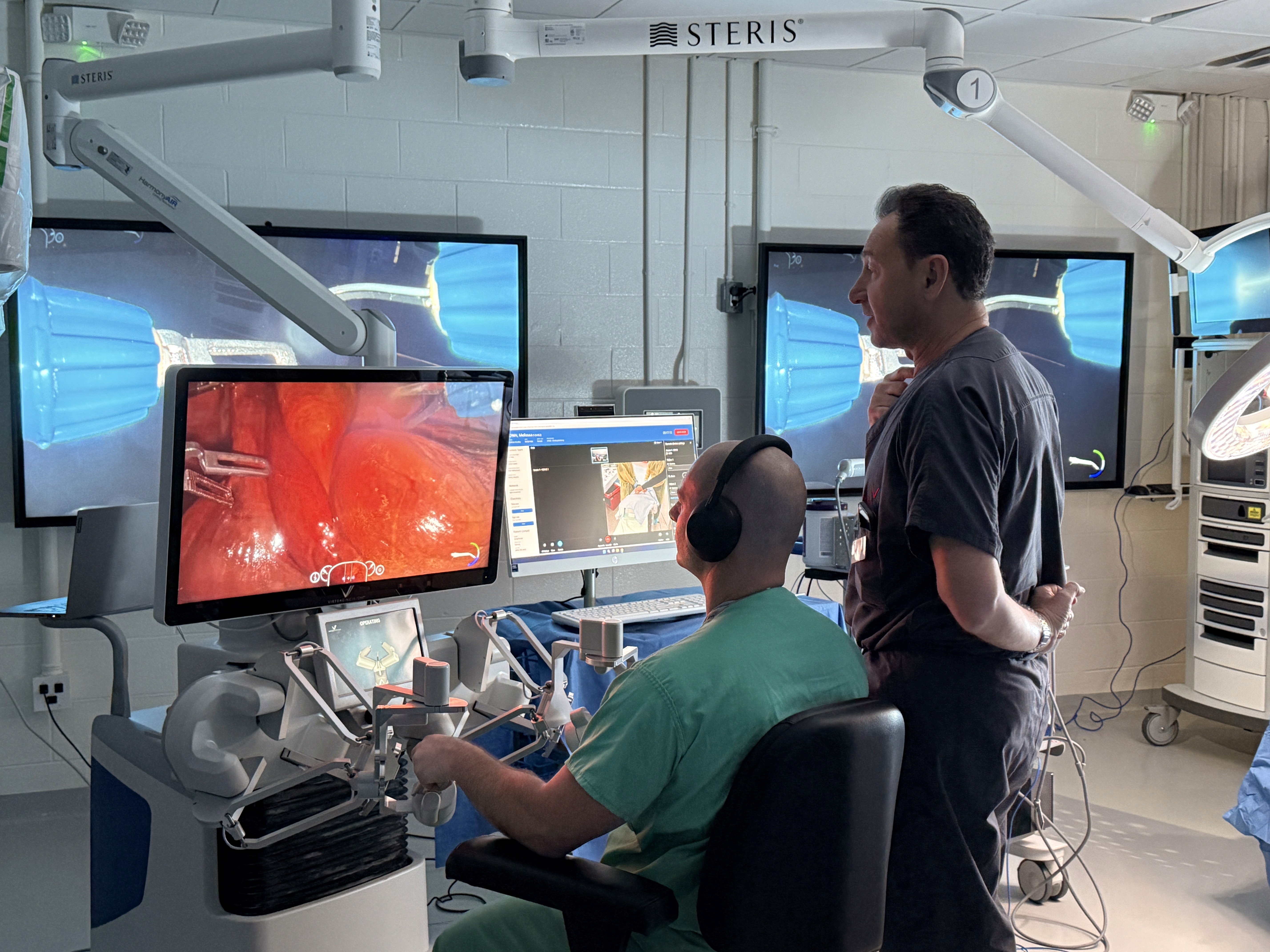
Remote surgery, also known as telesurgery, and remote procedures are the ability for a physician to perform a procedure on a patient located at a different location.
What is remote surgery & procedures?
Remote surgery, also known as telesurgery, and remote procedures are the ability for a physician to perform a procedure on a patient located at a different location.
What is remote surgery & procedures?
Remote surgery, also known as telesurgery, and remote procedures are the ability for a physician to perform a procedure on a patient located at a different location.
What is the history of remote surgery?
On September 7, 2001, Dr. Jacques Marescaux performed a cholecystectomy on a patient in Strasbourg, France, while in New York City. This procedure, named Operation Lindbergh, was the first true remote surgery to happen. The surgery was made possible by fiber optic technology and Computer Motion’s Zeus robotic system, which was founded by Sovato's co-founder and Executive Chairman Yulun Wang. This was the first company to receive FDA clearance for a surgical robot and then merged with Intuitive Surgical in 2003.
What is the history of remote surgery?
On September 7, 2001, Dr. Jacques Marescaux performed a cholecystectomy on a patient in Strasbourg, France, while in New York City. This procedure, named Operation Lindbergh, was the first true remote surgery to happen. The surgery was made possible by fiber optic technology and Computer Motion’s Zeus robotic system, which was founded by Sovato's co-founder and Executive Chairman Yulun Wang. This was the first company to receive FDA clearance for a surgical robot and then merged with Intuitive Surgical in 2003.
What is the history of remote surgery?
On September 7, 2001, Dr. Jacques Marescaux performed a cholecystectomy on a patient in Strasbourg, France, while in New York City. This procedure, named Operation Lindbergh, was the first true remote surgery to happen. The surgery was made possible by fiber optic technology and Computer Motion’s Zeus robotic system, which was founded by Sovato's co-founder and Executive Chairman Yulun Wang. This was the first company to receive FDA clearance for a surgical robot and then merged with Intuitive Surgical in 2003.
THE BENEFIT
What is the benefit of this new model of care?
Surgical deserts are a well-documented global issue in developed and underdeveloped countries. Over one-third of the world's population lives in regions without a sufficient surgical workforce.1 Across the United States, more than a third of counties do not have access to a single surgeon2, which will further compound by a projected shortage of 15,800-30,200 surgeons across all specialties by 2034.3 As a result, many patients are left with limited access and narrow choices for needed surgical care. Remote surgery and procedures promises to create unparalleled and broad access to the right surgeon and the highest quality surgical care.
What is the benefit of this new model of care?
Surgical deserts are a well-documented global issue in developed and underdeveloped countries. Over one-third of the world's population lives in regions without a sufficient surgical workforce.1 Across the United States, more than a third of counties do not have access to a single surgeon2, which will further compound by a projected shortage of 15,800-30,200 surgeons across all specialties by 2034.3 As a result, many patients are left with limited access and narrow choices for needed surgical care. Remote surgery and procedures promises to create unparalleled and broad access to the right surgeon and the highest quality surgical care.
What is the benefit of this new model of care?
Surgical deserts are a well-documented global issue in developed and underdeveloped countries. Over one-third of the world's population lives in regions without a sufficient surgical workforce.1 Across the United States, more than a third of counties do not have access to a single surgeon2, which will further compound by a projected shortage of 15,800-30,200 surgeons across all specialties by 2034.3 As a result, many patients are left with limited access and narrow choices for needed surgical care. Remote surgery and procedures promises to create unparalleled and broad access to the right surgeon and the highest quality surgical care.
What value does remote surgery create for health systems?
For health systems, growing centers of excellence and shoring up surgical volume requires overcoming a shortage of surgical capacity, expertise, and geographic constraints. Remote surgery and procedure programs optimize two of the most highly valuable resources for the provider––highly skilled physicians and care teams and equipped and staffed operating rooms. For health systems, this delivers a highly compelling growth strategy and a novel solution to optimize clinical capacity.
What value does remote surgery create for health systems?
For health systems, growing centers of excellence and shoring up surgical volume requires overcoming a shortage of surgical capacity, expertise, and geographic constraints. Remote surgery and procedure programs optimize two of the most highly valuable resources for the provider––highly skilled physicians and care teams and equipped and staffed operating rooms. For health systems, this delivers a highly compelling growth strategy and a novel solution to optimize clinical capacity.
What value does remote surgery create for health systems?
For health systems, growing centers of excellence and shoring up surgical volume requires overcoming a shortage of surgical capacity, expertise, and geographic constraints. Remote surgery and procedure programs optimize two of the most highly valuable resources for the provider––highly skilled physicians and care teams and equipped and staffed operating rooms. For health systems, this delivers a highly compelling growth strategy and a novel solution to optimize clinical capacity.
What value does Sovato provide to surgeons?
The roles and responsibilities of every care team member, including the surgeon, change in the context of remote surgery and procedures. As the remote physician, every interaction with your patient is done remotely––including the surgery and/or procedure. To efficiently manage your remote patients’ care journey, you need a single system––a command center––that brings together the people, systems, tools, and data to orchestrate and safely perform surgery and proceduers at a distance and scale. Sovato’s Orchestration Application restores what is altered by the nature of being remote, restoring a full sense of situational awareness for both the remote physician and care team.
What value does Sovato provide to surgeons?
The roles and responsibilities of every care team member, including the surgeon, change in the context of remote surgery and procedures. As the remote physician, every interaction with your patient is done remotely––including the surgery and/or procedure. To efficiently manage your remote patients’ care journey, you need a single system––a command center––that brings together the people, systems, tools, and data to orchestrate and safely perform surgery and proceduers at a distance and scale. Sovato’s Orchestration Application restores what is altered by the nature of being remote, restoring a full sense of situational awareness for both the remote physician and care team.
What value does Sovato provide to surgeons?
The roles and responsibilities of every care team member, including the surgeon, change in the context of remote surgery and procedures. As the remote physician, every interaction with your patient is done remotely––including the surgery and/or procedure. To efficiently manage your remote patients’ care journey, you need a single system––a command center––that brings together the people, systems, tools, and data to orchestrate and safely perform surgery and proceduers at a distance and scale. Sovato’s Orchestration Application restores what is altered by the nature of being remote, restoring a full sense of situational awareness for both the remote physician and care team.
What value does remote surgery create for patients?
For patients, remote surgery and procedures create access to the highest quality physician and the right care close to home, decreasing the need for travel or delayed care.
What value does remote surgery create for patients?
For patients, remote surgery and procedures create access to the highest quality physician and the right care close to home, decreasing the need for travel or delayed care.
What value does remote surgery create for patients?
For patients, remote surgery and procedures create access to the highest quality physician and the right care close to home, decreasing the need for travel or delayed care.
SOVATO NETWORK
Why does Sovato believe fiber is best approach?
Hospitals are fixed assets with a substantial investment in physical facilities. The vast majority of medical locations have existing telecommunication fiber already installed. Fiber is not susceptible to RF interference, weather, or other phenomena that can degrade service. Dedicated fiber provides a guaranteed data path and the lowest amount of latency between two points. This equates to approximately 1 to 400 gigs of data capacity, depending on the equipment or optics used.
Why does Sovato believe fiber is best approach?
Hospitals are fixed assets with a substantial investment in physical facilities. The vast majority of medical locations have existing telecommunication fiber already installed. Fiber is not susceptible to RF interference, weather, or other phenomena that can degrade service. Dedicated fiber provides a guaranteed data path and the lowest amount of latency between two points. This equates to approximately 1 to 400 gigs of data capacity, depending on the equipment or optics used.
Why does Sovato believe fiber is best approach?
Hospitals are fixed assets with a substantial investment in physical facilities. The vast majority of medical locations have existing telecommunication fiber already installed. Fiber is not susceptible to RF interference, weather, or other phenomena that can degrade service. Dedicated fiber provides a guaranteed data path and the lowest amount of latency between two points. This equates to approximately 1 to 400 gigs of data capacity, depending on the equipment or optics used.
How expansion is fiber in the US?
Fiber is widely available throughout the United States. Hospitals predominantly exist in populated areas that are going to have existing telecommunication infrastructure. With the US push for universal broadband access, fiber is only becoming more ubiquitous. Sovato conducted a market analysis that showed that more than 95% of hospitals in the US have known access to fiber. We don’t have readily available data on the remaining 5% as not all smaller regional telcos disclose where their fiber is located and the addresses they serve. Provided that data, we expect that many more hospitals would already have fiber. We also expect that if the hospital does not already have fiber, that the nearest provider would be substantially closer to the hospitals than the data suggests.
How expansion is fiber in the US?
Fiber is widely available throughout the United States. Hospitals predominantly exist in populated areas that are going to have existing telecommunication infrastructure. With the US push for universal broadband access, fiber is only becoming more ubiquitous. Sovato conducted a market analysis that showed that more than 95% of hospitals in the US have known access to fiber. We don’t have readily available data on the remaining 5% as not all smaller regional telcos disclose where their fiber is located and the addresses they serve. Provided that data, we expect that many more hospitals would already have fiber. We also expect that if the hospital does not already have fiber, that the nearest provider would be substantially closer to the hospitals than the data suggests.
How expansion is fiber in the US?
Fiber is widely available throughout the United States. Hospitals predominantly exist in populated areas that are going to have existing telecommunication infrastructure. With the US push for universal broadband access, fiber is only becoming more ubiquitous. Sovato conducted a market analysis that showed that more than 95% of hospitals in the US have known access to fiber. We don’t have readily available data on the remaining 5% as not all smaller regional telcos disclose where their fiber is located and the addresses they serve. Provided that data, we expect that many more hospitals would already have fiber. We also expect that if the hospital does not already have fiber, that the nearest provider would be substantially closer to the hospitals than the data suggests.
Does fiber support international remote surgery opportunity in the same way it does US?
5G may be easier to get in underdeveloped countries with limited installed telecommunication infrastructure but the variability of network performance will likely be an issue. Any long-distance or international deployments will always use fiber for long transit distances.
Does fiber support international remote surgery opportunity in the same way it does US?
5G may be easier to get in underdeveloped countries with limited installed telecommunication infrastructure but the variability of network performance will likely be an issue. Any long-distance or international deployments will always use fiber for long transit distances.
Does fiber support international remote surgery opportunity in the same way it does US?
5G may be easier to get in underdeveloped countries with limited installed telecommunication infrastructure but the variability of network performance will likely be an issue. Any long-distance or international deployments will always use fiber for long transit distances.
When (if at all) is 5G applicable?
5G or Starlink would be useful for mobile or temporary deployments of medical resources, perhaps in a rapid deployment disaster zone-type situation.
When (if at all) is 5G applicable?
5G or Starlink would be useful for mobile or temporary deployments of medical resources, perhaps in a rapid deployment disaster zone-type situation.
When (if at all) is 5G applicable?
5G or Starlink would be useful for mobile or temporary deployments of medical resources, perhaps in a rapid deployment disaster zone-type situation.
What are 5G advocates are not considering?
Fixed locations will always be better served with onsite fiber/ethernet connectivity. Given the limited mobility needs of surgical robots and consoles, using a technology that’s been designed for connectivity over large geographic distances or large dense public event situations doesn’t make sense. One significant issue is the in-building penetration of 5G signals, which is limited in the mid and upper 5G bands with the greatest bandwidth, connection speeds, and lowest latency. Using lower band 5G has great in-building penetration but the least capacity. Two hospitals 100 miles apart using 5G would only have the “last mile” be 5G with the longer distance traversed via telco fiber. Also, 5G cell towers all rely on fiber for connectivity to telcos terrestrial networks. Without widespread fiber, true 5G can’t exist.
What are 5G advocates are not considering?
Fixed locations will always be better served with onsite fiber/ethernet connectivity. Given the limited mobility needs of surgical robots and consoles, using a technology that’s been designed for connectivity over large geographic distances or large dense public event situations doesn’t make sense. One significant issue is the in-building penetration of 5G signals, which is limited in the mid and upper 5G bands with the greatest bandwidth, connection speeds, and lowest latency. Using lower band 5G has great in-building penetration but the least capacity. Two hospitals 100 miles apart using 5G would only have the “last mile” be 5G with the longer distance traversed via telco fiber. Also, 5G cell towers all rely on fiber for connectivity to telcos terrestrial networks. Without widespread fiber, true 5G can’t exist.
What are 5G advocates are not considering?
Fixed locations will always be better served with onsite fiber/ethernet connectivity. Given the limited mobility needs of surgical robots and consoles, using a technology that’s been designed for connectivity over large geographic distances or large dense public event situations doesn’t make sense. One significant issue is the in-building penetration of 5G signals, which is limited in the mid and upper 5G bands with the greatest bandwidth, connection speeds, and lowest latency. Using lower band 5G has great in-building penetration but the least capacity. Two hospitals 100 miles apart using 5G would only have the “last mile” be 5G with the longer distance traversed via telco fiber. Also, 5G cell towers all rely on fiber for connectivity to telcos terrestrial networks. Without widespread fiber, true 5G can’t exist.
THE SOVATO PLATFORM
How is Sovato enabling remote surgery and procedures at scale?
Sovato is focused on enabling remote procedure programs at scale. This means supporting multiple, simultaneous procedures across any robotic system, device, specialty, or site of care, safely and sustainably. While we work with robot and device partners to enable remote capabilities, the foundation of what we do is enable health systems to implement, operate, and scale these remote programs successfully. Today, Sovato is the first and only platform designed to support remote procedures at scale in this way—combining network infrastructure, platform services, and clinical workflows into a single, integrated solution that enables health systems to extend expert care beyond traditional physical and operational boundaries. We believe this is critical for real-world clinical application and for advancing our ultimate vision: enabling remote surgery and procedures for patients worldwide, with the scale, safety, and security necessary to meet the global demand.
How is Sovato enabling remote surgery and procedures at scale?
Sovato is focused on enabling remote procedure programs at scale. This means supporting multiple, simultaneous procedures across any robotic system, device, specialty, or site of care, safely and sustainably. While we work with robot and device partners to enable remote capabilities, the foundation of what we do is enable health systems to implement, operate, and scale these remote programs successfully. Today, Sovato is the first and only platform designed to support remote procedures at scale in this way—combining network infrastructure, platform services, and clinical workflows into a single, integrated solution that enables health systems to extend expert care beyond traditional physical and operational boundaries. We believe this is critical for real-world clinical application and for advancing our ultimate vision: enabling remote surgery and procedures for patients worldwide, with the scale, safety, and security necessary to meet the global demand.
How is Sovato enabling remote surgery and procedures at scale?
Sovato is focused on enabling remote procedure programs at scale. This means supporting multiple, simultaneous procedures across any robotic system, device, specialty, or site of care, safely and sustainably. While we work with robot and device partners to enable remote capabilities, the foundation of what we do is enable health systems to implement, operate, and scale these remote programs successfully. Today, Sovato is the first and only platform designed to support remote procedures at scale in this way—combining network infrastructure, platform services, and clinical workflows into a single, integrated solution that enables health systems to extend expert care beyond traditional physical and operational boundaries. We believe this is critical for real-world clinical application and for advancing our ultimate vision: enabling remote surgery and procedures for patients worldwide, with the scale, safety, and security necessary to meet the global demand.
What is Sovato's role in enabling remote surgery and procedures?
Sovato delivers a comprehensive solution for healthcare organizations to implement safe, scalable, and profitable remote surgery and procedure programs. Healthcare providers face more choices than ever as robotic systems become increasingly specialized. Sovato’s system-agnostic platform can remote-enable any surgical, interventional, or diagnostic system, allowing physicians to perform many procedures remotely – ultimately, offering physicians and healthcare organizations scale and choice. For healthcare organizations seeking to extend their reach, having a single platform to operate all remote procedures—across systems, specialties, and sites of care—ensures safety, security, scale, and operational simplicity.
What is Sovato's role in enabling remote surgery and procedures?
Sovato delivers a comprehensive solution for healthcare organizations to implement safe, scalable, and profitable remote surgery and procedure programs. Healthcare providers face more choices than ever as robotic systems become increasingly specialized. Sovato’s system-agnostic platform can remote-enable any surgical, interventional, or diagnostic system, allowing physicians to perform many procedures remotely – ultimately, offering physicians and healthcare organizations scale and choice. For healthcare organizations seeking to extend their reach, having a single platform to operate all remote procedures—across systems, specialties, and sites of care—ensures safety, security, scale, and operational simplicity.
What is Sovato's role in enabling remote surgery and procedures?
Sovato delivers a comprehensive solution for healthcare organizations to implement safe, scalable, and profitable remote surgery and procedure programs. Healthcare providers face more choices than ever as robotic systems become increasingly specialized. Sovato’s system-agnostic platform can remote-enable any surgical, interventional, or diagnostic system, allowing physicians to perform many procedures remotely – ultimately, offering physicians and healthcare organizations scale and choice. For healthcare organizations seeking to extend their reach, having a single platform to operate all remote procedures—across systems, specialties, and sites of care—ensures safety, security, scale, and operational simplicity.
What functionality does the Sovato Platform provide?
The Sovato Platform provides a fully-integrated solution including a surgical-grade network, clinical workflows, telepresence, data and analytics, and collaboration tools––to manage the entire remote patient journey safely and at scale.
What functionality does the Sovato Platform provide?
The Sovato Platform provides a fully-integrated solution including a surgical-grade network, clinical workflows, telepresence, data and analytics, and collaboration tools––to manage the entire remote patient journey safely and at scale.
What functionality does the Sovato Platform provide?
The Sovato Platform provides a fully-integrated solution including a surgical-grade network, clinical workflows, telepresence, data and analytics, and collaboration tools––to manage the entire remote patient journey safely and at scale.
What are Sovato's Platform Services?
Sovato orchestrates a suite of platform services that ensure uncompromising safety, security, and scalable performance for clinically sensitive, high-acuity use cases. Tightly integrated with the Sovato Network, Platform Services provide the foundational capabilities required to deliver reliable, consistent performance across any remote-enabled robotic system, device, and use case. Together, these functionalities act as the command center for every remote procedure. Sovato’s Platform Services ensure that the Sovato Platform delivers the most performant solution in the market, providing consistent low latency, minimal jitter, and negligible packet loss through isolated, dedicated network capacity.
What are Sovato's Platform Services?
Sovato orchestrates a suite of platform services that ensure uncompromising safety, security, and scalable performance for clinically sensitive, high-acuity use cases. Tightly integrated with the Sovato Network, Platform Services provide the foundational capabilities required to deliver reliable, consistent performance across any remote-enabled robotic system, device, and use case. Together, these functionalities act as the command center for every remote procedure. Sovato’s Platform Services ensure that the Sovato Platform delivers the most performant solution in the market, providing consistent low latency, minimal jitter, and negligible packet loss through isolated, dedicated network capacity.
What are Sovato's Platform Services?
Sovato orchestrates a suite of platform services that ensure uncompromising safety, security, and scalable performance for clinically sensitive, high-acuity use cases. Tightly integrated with the Sovato Network, Platform Services provide the foundational capabilities required to deliver reliable, consistent performance across any remote-enabled robotic system, device, and use case. Together, these functionalities act as the command center for every remote procedure. Sovato’s Platform Services ensure that the Sovato Platform delivers the most performant solution in the market, providing consistent low latency, minimal jitter, and negligible packet loss through isolated, dedicated network capacity.
What is Sovato doing about cybersecurity?
Sovato is following a Secure Product Development Framework (SPDF), as defined by the FDA. The scope of our SPDF includes Security Architecture, Threat Modeling, security analysis of all Third-Party Software Components, and Cybersecurity Testing (including static analysis of code, vulnerability scanning, and Penetration Testing). Each product component - (the Sovato Network, Sovato Platform, the Sovato Adapters) - follow the best practices and highest level of cybersecurity policies and implementation.
What is Sovato doing about cybersecurity?
Sovato is following a Secure Product Development Framework (SPDF), as defined by the FDA. The scope of our SPDF includes Security Architecture, Threat Modeling, security analysis of all Third-Party Software Components, and Cybersecurity Testing (including static analysis of code, vulnerability scanning, and Penetration Testing). Each product component - (the Sovato Network, Sovato Platform, the Sovato Adapters) - follow the best practices and highest level of cybersecurity policies and implementation.
What is Sovato doing about cybersecurity?
Sovato is following a Secure Product Development Framework (SPDF), as defined by the FDA. The scope of our SPDF includes Security Architecture, Threat Modeling, security analysis of all Third-Party Software Components, and Cybersecurity Testing (including static analysis of code, vulnerability scanning, and Penetration Testing). Each product component - (the Sovato Network, Sovato Platform, the Sovato Adapters) - follow the best practices and highest level of cybersecurity policies and implementation.
How does Sovato incorporate AI?
We believe remote programs will significantly advance the science of surgery – AI is a big component of this. Sovato prioritizes incorporating AI into the Sovato Platform where it aids patient care, advances ease of use and adoption, and supports deeper program insights.
How does Sovato incorporate AI?
We believe remote programs will significantly advance the science of surgery – AI is a big component of this. Sovato prioritizes incorporating AI into the Sovato Platform where it aids patient care, advances ease of use and adoption, and supports deeper program insights.
How does Sovato incorporate AI?
We believe remote programs will significantly advance the science of surgery – AI is a big component of this. Sovato prioritizes incorporating AI into the Sovato Platform where it aids patient care, advances ease of use and adoption, and supports deeper program insights.